Stone specification
Type, shape, dimensions, color direction, quantity and any documentation requirement.
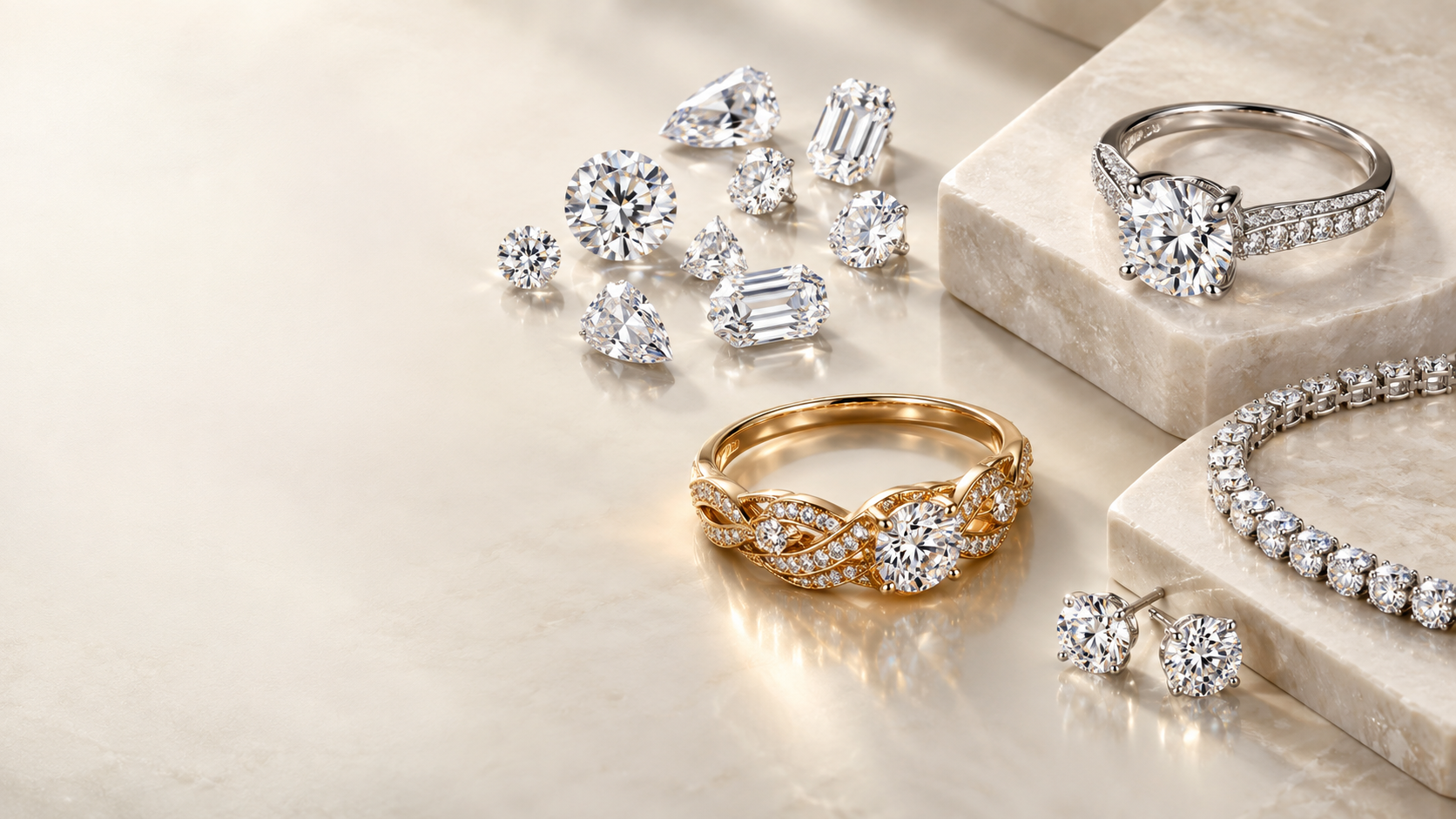
Jewelry materials guide
Stone, metal, plating, finish, wear expectations and target positioning should be considered together—not selected as disconnected line items.
Direct answer
The right material route depends on the collection’s intended market, appearance, wear expectations, target positioning, quantity and documentation needs. Moissanite or lab-grown diamond directions can be paired with precious or base-metal routes, while 925 silver and quality copper serve different commercial objectives.
Visual appearance alone cannot verify gemstone identity, metal purity or plating performance. These requirements must be stated, documented and confirmed for the actual project.
Material comparison
This table supports initial discussion. Final specifications belong in the approved project record.
| Route | Typical design use | Questions to confirm | Development focus |
|---|---|---|---|
| Moissanite | Bridal, statement and fashion jewelry requiring strong visual brilliance. | Shape, size, color direction, cut requirements and supporting documentation. | Stone layout, setting security, proportion and finish. |
| Lab-grown diamond | Fine-jewelry directions where diamond specifications are part of the brief. | Stone specification, grading/documentation expectations and supply route. | Traceable project specification and accurate setting plan. |
| 925 sterling silver | Accessible fine-jewelry and repeatable private-label collections. | Metal specification, plating, anti-tarnish expectations, finish and testing needs. | Weight, construction, surface finish and wear expectations. |
| Quality copper | Value-led fashion jewelry and design-led plated collections. | Plating system, nickel requirements, wear expectation, coating and target positioning. | Construction efficiency, plating appearance and stated care guidance. |
Specification framework
Type, shape, dimensions, color direction, quantity and any documentation requirement.
Base metal route, weight expectation, construction method and size range.
Color, thickness requirement where applicable, polish, texture and care expectation.
State the destination market and required testing or restricted-substance standards.
Confirm which details must be reviewed through images, measurements or physical samples.
Keep approved specifications, color direction and finish references connected to the project.
Material inquiry
Share your market, target positioning, jewelry category, preferred stone and metal direction.